Smart fiber optics in the North Sea
There are a lot of fiber-optic cables in the North Sea that connect us to other countries, including England. However, some of these cables are not in use and are therefore considered “dark fiber.” TNO plans to use this dark fiber to detect ships approaching the cables, in order to identify and prevent espionage in a timely manner. Using a special technique, they can use the kilometer-long cables as a kind of sensor. When laser light is sent through the cables, a reflection of that light is returned. If a sound source comes close to the cable, the cable distorts slightly, causing the reflection of the laser light to change as well. A special device, the DAS Interrogator, picks up on that change.
How do you know what causes a change?
Of course, such a change in reflection doesn’t necessarily mean we’re being spied on. After all, marine life can also cause changes in the fiber-optic cables. So how do we know what’s causing the change? With the DAS Interrogator, you can pinpoint the exact location and direction of the sound source. That way, they can quickly determine whether the source poses a threat or not. A whale swimming by, for example, is easy to identify.
Do we really need this?
You might be wondering, “Is all of this really necessary?” We can imagine that, but in the summer of 2022, the Nord Stream pipelines were already sabotaged. This made it clear that the installations on the seabed of the North Sea are more vulnerable than we think. Due to the war between Russia and Ukraine, there has been increased attention in recent years on the vulnerability of the North Sea. If an attack were to be carried out on all the cables and installations on the seabed, it would be a disaster not only for the Netherlands but also for the countries around us. That is why securing the North Sea seabed with smart fiber optics is now more important than ever!
What are the benefits of fiber-optic internet?
Fiber-optic internet gives you access to incredibly fast internet. Fiber-optic internet speeds range from a minimum of 50 megabits per second to a maximum of 2 gigabits per second—which is up to 40 times faster. Fiber-optic internet is generally much faster than traditional cable internet, but that’s not the only advantage. If you use a DSL connection, the speed and stability of your connection often depend on the distance between you and a local exchange. If you live in a more remote area, that distance is often greater. This means you’re more likely to experience slow internet or a connection that occasionally drops out. With fiber-optic internet, you no longer have to deal with this. This is because the connection isn’t dependent on the distance to a central office, and weather conditions don’t affect the stability of the connection either.
What are the disadvantages of not granting permission for fiber-optic installation?
If a provider wants to connect your home to fiber optic internet, you’ll likely receive a letter in the mail or have someone come to your door. It doesn’t matter whether you own or rent your home. You’ll then be asked whether or not you consent to having your home connected to fiber optic internet. If you’d like to give your consent, you can easily do so online. In most cases, giving your consent does not require you to actually sign up for a fiber-optic subscription with the provider. Are you unsure about this? We recommend checking with the provider requesting your consent. If you give your consent, this will cause you little inconvenience. The only thing you need to keep in mind is that someone must be home when the technician comes to install the connection.
Why would you give your consent?
There are plenty of reasons to choose to grant permission for a fiber-optic connection at your home. For example, if you might want to switch to fiber-optic service in the long run, it’s obviously nice to have the connection already in place. Even if you’re not sure yet, there’s really no harm in giving your permission. Who knows—you might decide to switch in the future after all. Just make sure to check whether the connection is free and that you aren’t required to sign up for a fiber-optic subscription right away. In that case, it won’t be a hassle for you, so it’s a good idea to just give permission for fiber-optic!
The rapid development of Artificial Intelligence
ChatGPT was launched in late 2022, and since then, the development of AI has accelerated rapidly. We all started using the AI chatbot en masse, sometimes to the annoyance of schools and teachers. More and more new AI tools appeared, and of course, we still see that today. Companies have also begun exploring the possibilities that AI has to offer them. The use of artificial intelligence has thus become almost indispensable in our society. It is no coincidence that experts view 2023 as the breakthrough year for this new technology. If we are to believe those experts, 2024 will be the year in which AI becomes increasingly human-like. We also refer to this as “Human AI.”
Why is AI becoming more human-like?
Human AI refers to artificial intelligence becoming more human-like and intuitive. As a result, the technology naturally begins to think more like a human being rather than a computer. This makes a significant difference, particularly in terms of productivity and creativity within AI. Another consequence of this is that AI will become less noticeable, as it becomes easier to integrate it into everything due to increased user-friendliness.
What will change as AI becomes more human-like?
Four trends have emerged in AI technology that will make AI more human-like. Below, we’ll outline those four trends for you:
- Information needs: This is the primary use case for ChatGPT: providing information. Thanks to AI, you no longer have to spend hours scouring Google for information. Now you simply ask a question and receive a personalized answer with advice, summaries, essays, images, or even art. So instead of searching for something, you’re increasingly engaging in a “conversation” with such an AI bot. The AI you converse with is thus becoming more human-like.
- AI as a companion: In addition to providing people with advice and assistance, AI is increasingly capable of taking action on their behalf, both online and offline. AI technology can take over tedious and repetitive tasks from people, allowing them to focus on the enjoyable aspects of their work. This not only increases job satisfaction but also improves work-life balance.
- AI and the Human Body: AI can also become an important tool in the field of healthcare. More and more advanced technologies are coming onto the market to monitor our health. Examples include wearables and neurotechnology for measuring brain activity, as well as eye and motion tracking. By leveraging these technologies, AI can provide us with sound advice on how to live and work more healthily.
- Virtual environments: We already use virtual environments on a regular basis, for example when shopping online. Thanks to AI, this experience will only become more human-like and better. Think, for example, of trying on clothes online, digitally decorating your home, and working remotely. Finally, virtual environments can help us improve our skills, for example through educational games or realistic simulations.
How can your company leverage AI in 2024?
As AI technology becomes more human-like and creative, it will also open up a host of new opportunities for the business world. Consider, for example, boosting employee productivity by automating tedious and routine tasks. In the long run, this will not only lead to greater efficiency and increased revenue, but also to happier employees!
Microsoft is considering nuclear power plants for data centers
Microsoft has recently set up many new data centers, largely due to the rise of AI. There has long been a debate surrounding AI’s energy consumption, which is generally quite high—especially since this technology is still in its infancy. The data centers used for AI technology consume a lot of power, and Microsoft is well aware of this. AI applications require more computing power. This necessitates more powerful servers that need more energy to function properly. It appears that Microsoft sees nuclear energy as a solution to this growing problem. Last year, the company posted a job opening for a manager of “nuclear energy strategy.”
SMRs for data center power supply
Of course, this wouldn’t mean that nuclear power plants would be built right next to all the data centers. SMRs would be used to provide power. These are small, modular reactors that are cheaper and easier to build than an entire nuclear power plant. However, an SMR also requires highly enriched uranium fuel to operate properly. In addition, nuclear waste will always remain a problem, especially with smaller reactors. SMRs actually produce more nuclear waste than traditional nuclear power plants!
Nuclear fusion instead of nuclear energy
Microsoft is also exploring another solution for its energy needs: nuclear fusion. Nuclear fission occurs in nuclear power plants, but nuclear fusion is the opposite of this. In nuclear fusion, atomic nuclei are fused together instead of split apart. This requires extremely high temperatures and extremely high pressure. The reaction releases a large amount of energy, but no nuclear waste is produced by this process. Many companies see this as the future of environmentally friendly energy supply. Last year, Microsoft signed a deal with the startup Helion, which is developing a future fusion power plant. If this technology is further developed, it could be a viable alternative to using nuclear power plants for data centers.
Do you think nuclear energy could be a solution to the high energy consumption of data centers?
1. Fiber optics consume less energy, which is better for the environment
A fiber-optic connection uses less energy than a traditional connection. This is because a fiber-optic network transmits data using light signals. Not only is this extremely fast, but it’s also very environmentally friendly. Fiber-optic internet uses as much as seventeen times less energy than networks that use electrical signals.
2. Underground cables generate less heat
Since fiber optics transmit data using light signals, the cables in the ground generate less heat. Networks that use electrical signals generate more heat, which is transferred to the ground through the cables. Fiber optics therefore have less of a negative impact on the soil and the environment, since the cables emit very little heat. This keeps the soil more fertile, moister, and thus of higher quality, ensuring that nearby grass, plants, and trees are not harmed and continue to receive the same amount of nutrients!
3. Fiber-optic connections emit less radiation
The transmission of data results in the emission of radiation, which unfortunately cannot be avoided at this time. Since the technology behind fiber optics is more environmentally friendly than other types of connections, it also emits less radiation. This is therefore an additional environmental benefit compared to a DSL or cable connection. If everyone were to switch to fiber-optic internet, it would even help combat global warming.
4. Fiber optics result in lower emissions and thus a reduced environmental impact
Fiber-optic cables do not release toxic substances into the soil in which they are buried, nor do they generate much heat. Networks that use copper cables, on the other hand, do release toxic substances into the soil, which is, of course, very harmful to the environment. This is because copper can eventually rust, and rust can cause significant soil contamination. Fiber optic material is not affected by underground conditions and therefore cannot rust, meaning no toxic substances are released that harm the soil.
5. Fiber-optic connections ensure sustainable networks
Fiber-optic networks are much more sustainable and better for the environment than DSL or cable networks. This is because they are more modern networks that require significantly less maintenance. As a result, the ground needs to be dug up less often, and fewer service vehicles need to travel across the country to perform maintenance. In addition, a fiber-optic network is much less prone to outages, which is, of course, a major advantage for consumers.
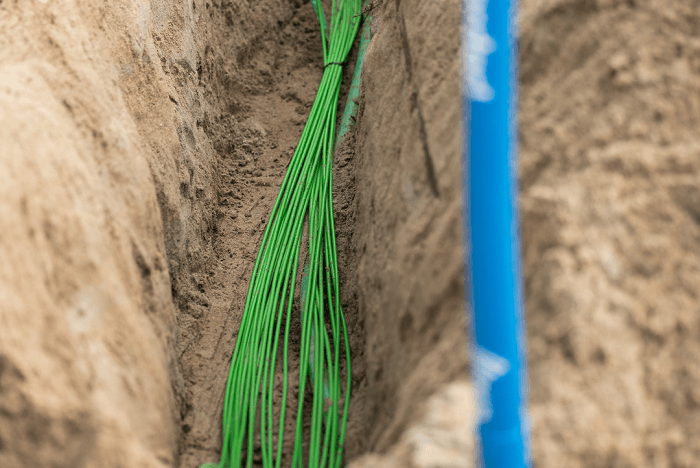
A broken or damaged cable or fiber
A common cause of a failure in a fiber-optic network is a broken or damaged fiber-optic cable. In such cases, the cable is broken in a way that prevents it from transmitting light, causing the connection to be completely lost. It is also possible that not the entire cable is broken, but only one or more fibers within the cable. This can happen in several ways:
- An excavation incident: It often happens that fiber-optic cables are damaged when they are accidentally struck by an excavator or during other construction work.
- Rodents: Fiber-optic cables aren’t just damaged by excavators—rodents can cause damage too. Since the cables are buried underground, mice or rats are bound to find them at some point. Fortunately, there are ways you can protect your fiber-optic cables from rodents.
Fiber-optic outage caused by dirt or moisture in the cables
Dirt or moisture is also a common cause of fiber optic network outages, but this cause is often overlooked or even underestimated. Yet it is the most common cause of fiber optic outages; in fact, about 70% of outages in a fiber optic network are caused by dirt or moisture. There are several ways in which dirt or moisture can enter the network or get onto a connector:
- Dusty environment: If fiber optic cable is located in a dusty environment, dust particles can settle on the connector. This can significantly affect network performance and even cause a malfunction.
- Exposure to water: If a fiber-optic cable is exposed to water for too long and is not water-resistant, moisture may eventually penetrate the cable. You can prevent this by carefully assessing in advance whether the cables might come into contact with water. If the answer is “yes,” you can opt for special fiber-optic cables designed to be water-resistant.
Micro- and macro-bending
It is also possible that some light gets through, but not in the required amount. This results in lower power. This loss of power is also referred to as “attenuation.” If attenuation becomes too high, it can lead to malfunctions, so it is advisable to take action in a timely manner to prevent such issues. In cases of attenuation, the cable is not broken or damaged. The cause often lies in a bend the cable must make, which may be just too sharp. As a result, light could escape from the fiber at the bend. A distinction is made here between micro- and macro-bends. Macro-bends are bends visible to the naked eye, while micro-bends are bends that can only be seen with a microscope. Micro bends are often the result of a manufacturing defect in the cables, and unfortunately, there is little that can be done about this. This is one of the things we always check our products thoroughly for before they are shipped to the customer, to prevent any malfunctions. Fortunately, there is a solution for macro bends: reducing the bends in the cables or making them less sharp. If that doesn’t work, you can use special fiber-optic cables that have a smaller minimum bend radius.
An error during cable termination
Finally, the cause of a fiber-optic fault may lie in an error during the termination of the fibers. Attenuation can quickly become too high during fusion splicing, which reduces the quality of the cable. All steps in the splicing process must be performed properly and carefully, but of course you cannot verify this yourself if you purchase the cables from a third party. This also applies to the termination of the fiber optic connectors—essentially, the bonding of the fibers. Before bonding and splicing, it is important to test the connection using an OTDR. An OTDR measurement is also an effective way to detect a fiber optic fault. We always check this carefully before shipping our products!
What is a fiber-optic network?
Fiber optics transmit digital information through wafer-thin glass fibers using laser light. This results in much faster download and upload speeds. The way a fiber-optic network transmits information can be compared to Morse code signaling. Fiber optics transmit digital information using laser light, just as Morse code does by flashing a light. Fiber optics flashes the laser light at lightning speed; the faster it goes, the faster the information is transmitted. The fiber-optic modem then converts the light signals into a usable signal for the internet, phone calls, and television.
The benefits of fiber-optic internet
If you get your internet connection via fiber optics, there are many benefits:
- Lightning-fast internet: When you choose fiber optic internet, you’re choosing the fastest network in the Netherlands. Most providers offer speeds of up to 8,000 Mbps.
- Faster downloads and uploads: A fiber-optic connection offers download and upload speeds that are equally fast. This means you have what’s known as a “symmetrical connection.” That’s a major advantage, because with other types of connections, the upload speed is significantly lower than the download speed. Do you have your own YouTube channel, for example? Then having a high upload speed is ideal!
- A stable connection: If you use a fiber-optic connection, you’ll always have access to the network’s maximum speed. Nothing affects the stability of your internet connection—not your neighbors, not the weather, and not other electronic devices.
- Lower energy consumption: A fiber-optic connection uses less energy than other types of connections. That’s certainly a nice bonus these days. Fiber-optic technology consumes less energy because it uses laser light rather than electricity. In addition, research shows that fiber-optic network equipment is 60% more energy-efficient.
- More freedom: In the Netherlands, the fiber-optic network is open to other providers. In principle, any provider can offer its plans here, giving you, the consumer, more freedom of choice.
Does fiber optics have any drawbacks?
Fiber optics has more advantages than disadvantages, but that doesn’t mean there aren’t any downsides at all. Connecting a TV via a fiber-optic network is a drawback that’s often mentioned. To do this, you need a network cable between your modem and your TV. Most people have coaxial cabling in their homes, but no UTP network. Fortunately, there are a number of solutions to connect your TV to your fiber-optic connection. Another disadvantage of fiber-optic internet is its limited availability in the Netherlands. Currently, about 40% of people in our country still do not have access to a fiber-optic connection. Finally, a fiber-optic connection is generally more expensive than other types of internet connections. On the other hand, you do get faster and more stable internet!

Items that incorporate fiberglass
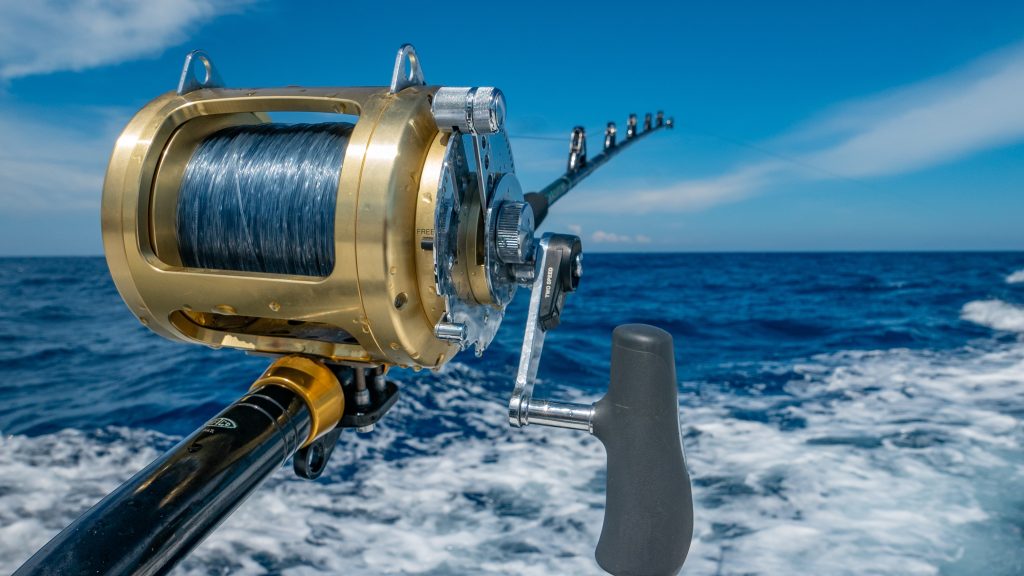
Of course, we know that fiberglass is used to make the cables that allow us to set up a fiber-optic internet connection, but that’s not the only thing the material is used for. Fiberglass is incorporated into many products that need to be strong yet remain flexible. Think, for example, of items such as skis, brake pads, and fishing rods.
- Skis: Skis are, of course, primarily made of wood, but this isn’t the only material used. A ski consists of a huge number of layers, often combining different types of wood. To make a ski stiffer, a layer of fiberglass or metal is sometimes added.
- Brake pads: We also frequently encounter fiberglass in brake pads. Brake pads work by generating friction. In the past, asbestos was widely used as a friction material, but today we naturally try to avoid it. Nowadays, we opt for alternatives such as fiberglass, Kevlar, and mineral components.
- Fishing Rods: Fishing rods can be made from a variety of materials, and fiberglass is one of them. Fiberglass rods offer great precision, are the most resistant to the impact of fish, and are the least likely to bend.


Applications of fiber optics in the home
Fiberglass can also be used in various ways in and around your home, aside from the fiber-optic cables you can install for your internet connection. For example, you can use fiberglass to insulate your home. Glass wool is a popular insulation material, providing both thermal and sound insulation. Glass wool is made from glass fibers. There is also fiberglass wallpaper, which is stronger than regular wallpaper and therefore better protects your walls. This is why it’s a popular choice when it comes to wallpaper. So there you have it: fiberglass is used for more things in the home than you might think!
Fiber-optic cables as sensors
Fiber-optic cables are used not only for internet connections but also as sensors. With fiber-optic sensors, engineers can monitor levees, detect undersea earthquakes, transmit energy, and even “listen.” The use of fiber-optic cables as sensors is also known as “fiber sensing.” The cables are used to detect vibrations, temperature changes, and stretching or contraction. Fiber optics can detect changes with extreme precision, even at nearly the molecular level. This means fiber optic cables allow for super-accurate measurements. So, as you can see, there are far more applications for fiber optics than you might think!