
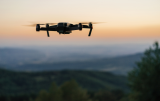
Russia recently developed a new drone that cannot be jammed by electronic signals. They actually took a very simple approach: instead of radio waves, the Russians use fiber-optic cables to control the drone. In this blog, we’ll tell you more about these Russian drones and what they mean for electronic warfare!
Ukrainian victories prompt the development of drones
The Ukrainian military has recently scored a number of major victories against the Russian military. Just recently, Ukraine even invaded the Russian region of Kursk. They achieved this, in part, by disrupting Russian communication and control systems. So you can understand that Russia didn’t want this to happen again. That’s why the Russians created new drones that operate via fiber-optic cables. After all, these cannot be disrupted, so the Ukrainian army can no longer effectively use this tactic.
The drone is not affected by interference thanks to fiber-optic cables
The new drone was developed in the Russian city of Novgorod, at the Ushkuynik production center. The drone’s design ensures that it can be deployed in areas where radio communication is disrupted without compromising its functionality. This is thanks to the fiber-optic cables, which allow the drone to be controlled with precision. This technology is also used in wire-guided missiles. The first reports about this new drone were released via the military Telegram channel Siberian Army.
Fiber-optic drones are also available on the commercial market
According to Forbes, Ukraine is currently working on similar technologies. And they are not the only ones looking to adopt this idea from Russia. The German company HIGHCAT is set to demonstrate a fiber-optic drone in Ukraine later this month, and a company from Singapore is also offering a similar fiber-optic system for drones on the commercial market. The company is called Skywalker Technology and offers not only this technology but also various types of drones with military applications. So it’s a popular new technology, but of course there are also drawbacks. After all, the drone can’t fly farther than the fiber-optic cable is long. Additionally, there’s always the risk that the cable could get damaged or tangled. Finally, the pilot must stand closer to the target than usual, which naturally increases the risk somewhat.