
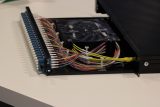
Would you like to have fiber-optic internet at home, but it’s not yet available in your neighborhood? Of course, that doesn’t mean you can’t start looking into it now for when it does become available. After all, the ultimate goal is for the entire country to have fiber-optic internet. In this article, we’ll explain how fiber-optic internet is installed and how you can connect it yourself or have it connected to your home!
What is fiber optics?
Fiber-optic cables allow you to transfer data at extremely high speeds—much faster than with a DSL or cable connection. This is why fiber-optic infrastructure is being installed in more and more areas to provide faster internet, as well as better TV and phone service. A major advantage of a fiber-optic connection is that the upload and download speeds are equally fast. With other types of internet connections, the upload speed is almost always lower than the download speed. If the upload speed is as fast as the download speed, you can send something just as quickly as you can download it.
How can you tell if fiber-optic internet is already available in your neighborhood?
If you’d like to start using fiber-optic internet, it’s obviously helpful to know whether or not fiber-optic service is already available in the neighborhood where you live. Currently, about half of all households in the Netherlands are connected to the fiber-optic network. You can check if your neighborhood is included on the “fiber map” from the Stratix research firm. Using the postal code checker provided by fiber optic providers, you can find out for yourself whether your address is already connected to fiber optic internet or if a provider plans to connect it soon. Check with the following providers:
- DeltaFiber Network
- KPN NetworkNL
- E-Fiber
- Glass Gate
- T-Mobile/Open Dutch Fiber
Get fiber-optic internet installed
If fiber optic internet isn’t available in your neighborhood yet, you can check to see if there are currently any plans to install it there. If a company is planning to install fiber optic internet in your neighborhood, you can expect the process to take a long time. It can easily take a year from the moment you receive the first information about fiber optic internet in your neighborhood. The installation itself takes an average of 3 to 6 months. People are often very satisfied with the new network once it’s installed, but the process can be bumpy and may also cause inconvenience and criticism from neighborhood residents. There are a number of steps in the process for which you do not need to be home, but for the other steps, this is necessary.
You do not need to be home for these steps of the fiber optic connection:
- Fiber-optic cable is being laid in the street. They’re removing tiles from the sidewalk to lay the cable, which may cause some inconvenience. They won’t be closing off the street, but there’s a good chance you’ll have to pull your car over to the side.
- The workers also run the cable from the street to the houses. They use a special drill to bore a tunnel under the yard to the house. They then pull the fiber-optic cable through that tunnel to the house.
You must be at home to complete these steps:
- The technicians will run the fiber-optic cable through the exterior wall into your home to connect it. You can specify where in your home you’d like this to be done. They will then install a device called an FTU in your home. An FTU is a special modem to which the fiber-optic cable is connected.
- Have you already signed up for a fiber-optic internet plan with a provider? If so, the provider’s modem still needs to be installed before you can access the internet via fiber-optic. You can connect the fiber-optic provider’s equipment to the FTU yourself or have a technician do it for you. Once that’s done, you can start using fiber-optic internet right away.
How much does it cost to install and connect fiber-optic internet?
This varies by fiber-optic provider, but in the case of KPN NetwerkNL, fiber-optic installation is usually free if the entire neighborhood is being connected. If fiber-optic cables are already in the neighborhood but haven’t yet reached your home, you’ll often have to pay the connection fee. You can, however, request a free feasibility study to determine whether your home can be connected to fiber-optic service. Other fiber optic providers often operate the same way, but they typically charge connection fees upfront. The cost of retrofitting fiber optic service, if a network is already in your neighborhood, ranges from 150 to 1,500 euros. These costs depend on the distance from your home to the existing cabling.